
What Should Doctors Look for When Choosing an Otoscope for Routine Ear Examination?
Choosing an otoscope involves more than comparing price or magnification. This analysis examines optical clarity, illumination, viewing lens design, speculum sizes, portability and whether conventional or digital otoscopes are more practical for routine clinical examination.

What to remember
- Optical clarity and effective illumination are more important than magnification alone.
- Multiple ear speculum sizes improve practicality for different patients and examinations.
- A rotating viewing lens can provide greater flexibility during routine otoscopy.
- Conventional otoscopes remain practical when image recording or remote sharing is unnecessary.
Table of contents
- Why Otoscope Selection Deserves More Attention
- 1. Magnification: More Is Not Automatically Better
- 2. Optical Clarity Can Matter More Than the Magnification Number
- 3. Why a Rotating Viewing Lens Can Be Useful
- 4. Illumination: Brightness Is Only Part of the Requirement
- 5. Ear Speculum Size Is Not a Minor Detail
- 6. Reusable or Disposable Specula?
- Reusable specula
- Disposable specula
- 7. Battery Operation and Portability Still Matter
- 8. Conventional vs Digital Otoscope: Which One Does a Clinic Need?
- Conventional optical otoscope
- Digital / video otoscope
- 9. What Should Hospitals Consider Before Purchasing?
- Optical system
- Illumination
- Speculum range
- Cleaning workflow
- Power source
- Durability
- Availability
- Intended application
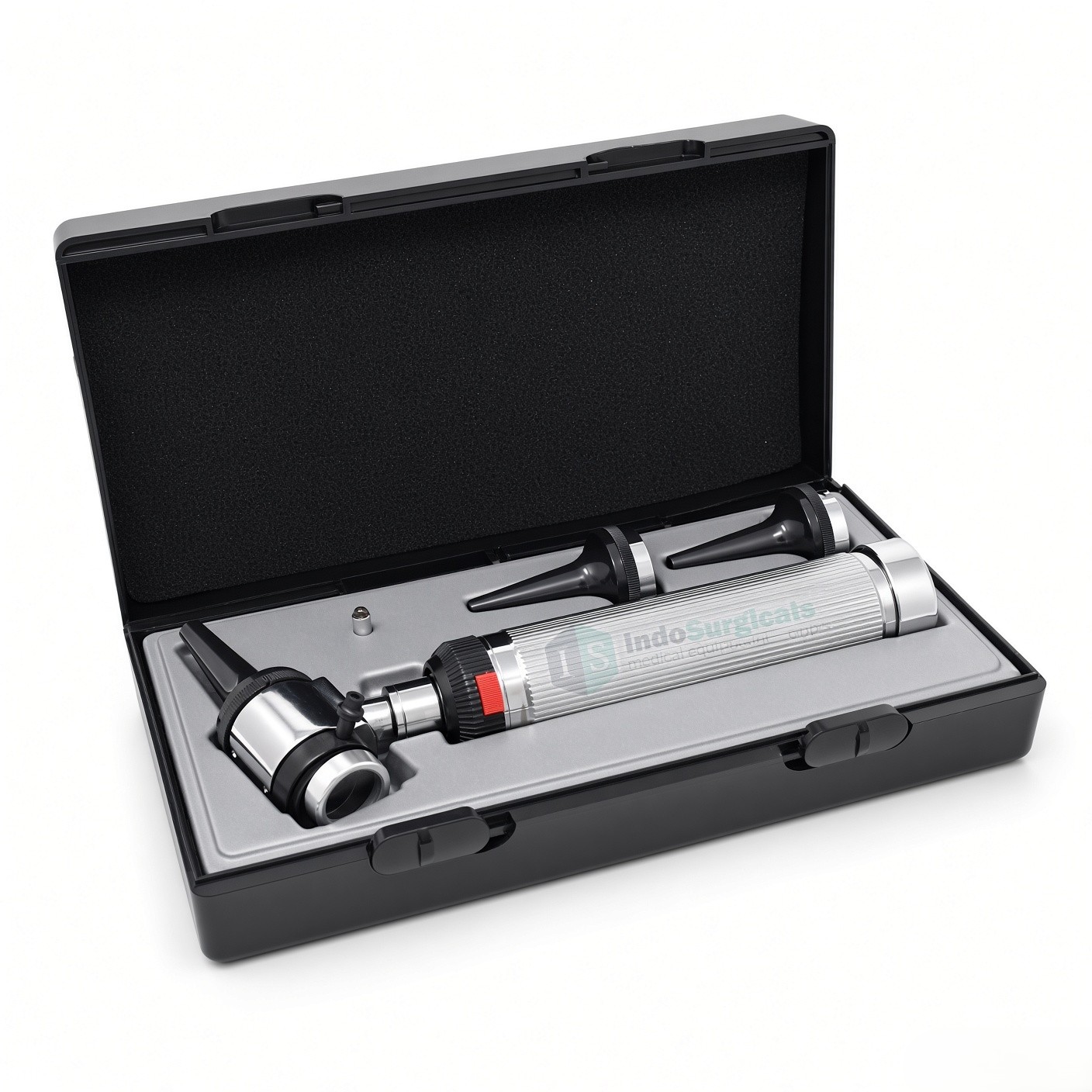
- IndoSurgicals Deluxe Quality Otoscope — Model 15055
- 10. What About Medical Students and Clinical Training?
- 11. Avoid Choosing an Otoscope Only by Price
- So, What Makes a Good Routine Otoscope?
- What Is Your Experience?
- Explore Otoscopes & Diagnostic Equipment
What Should Doctors Look for When Choosing an Otoscope for Routine Ear Examination?
Magnification, illumination, field of view, speculum sizes, portability and digital features all sound important—but which characteristics actually make a difference during everyday otoscopic examination?
The otoscope is one of the most familiar handheld diagnostic instruments in clinical practice. It may appear simple compared with modern imaging technology, yet obtaining a useful view of the external auditory canal and tympanic membrane depends on a combination of optical quality, illumination, suitable speculum selection and correct examination technique.
Today, clinicians can choose between conventional optical otoscopes, rechargeable instruments, LED models, video otoscopes and even smartphone-connected devices. The increasing number of options raises an important practical question: what does a doctor actually need from an otoscope used for routine examination?
Why Otoscope Selection Deserves More Attention
An otoscope is primarily used to visually examine the external ear canal and tympanic membrane. In everyday practice it may form part of the assessment of patients presenting with symptoms such as ear discomfort, discharge, reduced hearing, a blocked sensation or suspected foreign material.
The instrument does not make a diagnosis by itself. It provides a magnified illuminated view which must be interpreted by an appropriately trained healthcare professional together with the patient's history, symptoms and complete clinical assessment.
Because the ear canal is narrow, curved and naturally dark, even a seemingly small difference in optical clarity or illumination can influence how easily the examiner obtains an adequate view. This is why an otoscope should be assessed as an optical examination instrument, rather than simply as a torch with an ear attachment.
1. Magnification: More Is Not Automatically Better
Magnification is usually one of the first specifications mentioned when comparing otoscopes. Its purpose is straightforward: it enlarges the visible structures of the ear canal and tympanic membrane so that the examiner can inspect them more comfortably.
However, magnification should not be judged as an isolated number. Higher magnification can reduce the apparent field of view and may make positioning less forgiving. What matters clinically is whether the optical system provides a sufficiently enlarged and clear image while retaining a practical viewing field.
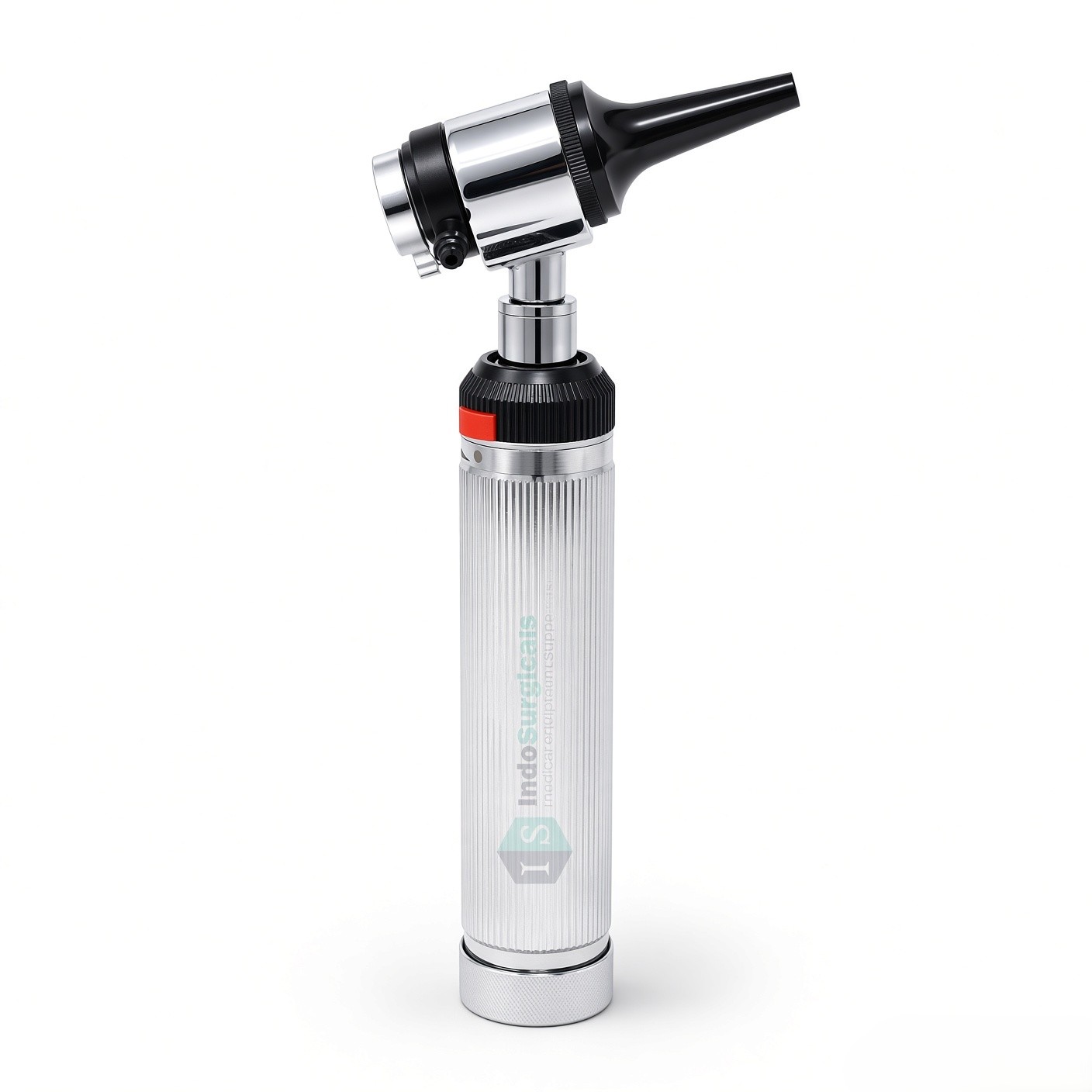
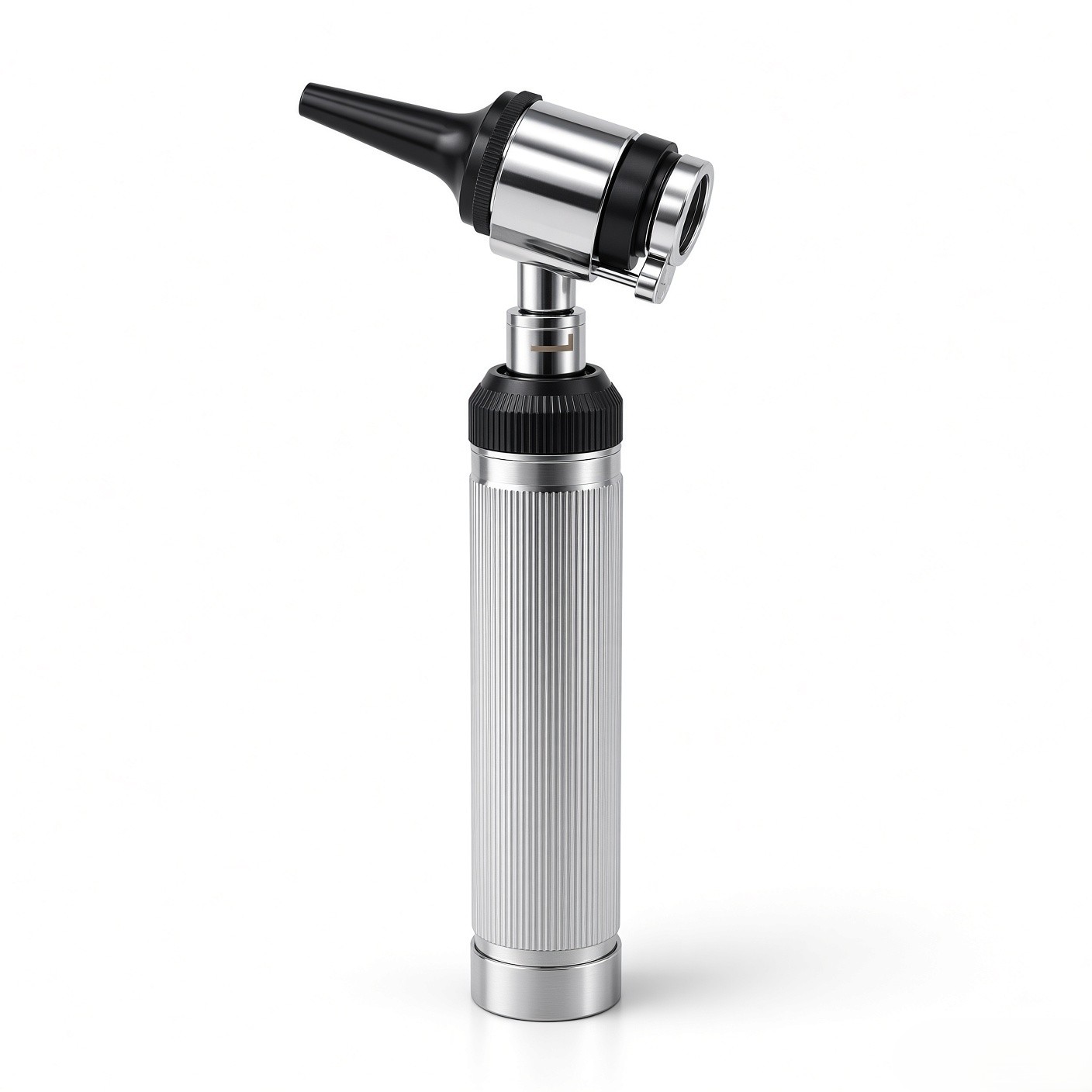
The IndoSurgicals Deluxe Quality Otoscope, Model 15055 is specified with 3× magnification, a level commonly associated with conventional handheld otoscopic examination.
2. Optical Clarity Can Matter More Than the Magnification Number
A specification such as 3× or 4× tells only part of the story. If the lens produces distortion, reflections or poor edge clarity, additional magnification may offer little practical benefit.
When assessing an otoscope, doctors and institutional buyers should therefore pay attention to the complete viewing experience:
- Is the central image clear?
- Are anatomical structures easy to distinguish?
- Does the image remain useful across a reasonable viewing area?
- Does the lens create distracting reflections?
- Can the examiner reposition the viewing window when required?
These characteristics often matter more during a real examination than simply choosing the instrument carrying the largest magnification figure.
3. Why a Rotating Viewing Lens Can Be Useful
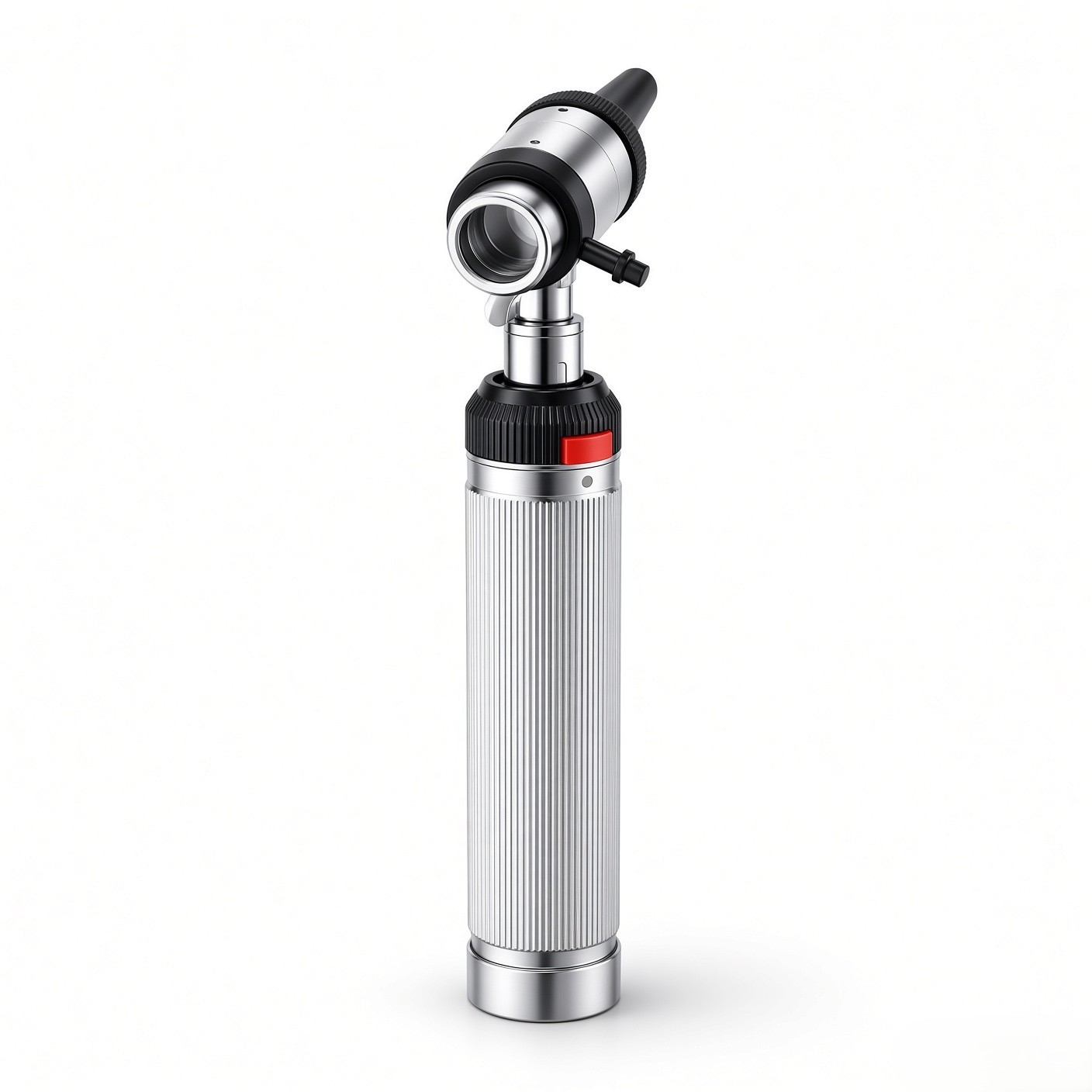
Conventional otoscopes may use a fixed or movable viewing system. A rotating lens provides additional flexibility because the optical window can be repositioned without requiring the entire instrument to be removed.
On the IndoSurgicals Model 15055, the supplied specification describes a rotating wide-angle viewing lens and indicates that the arrangement supports instrumentation while viewing under magnification.
For routine visual examination this can simply make the instrument easier to work with; in appropriately trained hands, access around the viewing window may also be useful when manipulation under direct visualization is required.
4. Illumination: Brightness Is Only Part of the Requirement
An otoscope needs to illuminate a narrow anatomical passage effectively. Insufficient light makes examination difficult, while an uneven or poorly directed beam can produce glare and shadows that obscure the view.
Therefore, when evaluating illumination, clinicians should consider more than the claimed bulb technology. Relevant questions include:
- Is the ear canal illuminated evenly?
- Is the light adequately bright for routine examination?
- Does the optical arrangement minimize distracting reflections?
- Does illumination remain consistent as battery power decreases?
- Can replacement lamps, batteries or related components be obtained easily?
The current IndoSurgicals Model 15055 product information specifies 2.5 V illumination and battery operation. Buyers should always verify the current bulb configuration and other technical specifications with the manufacturer before procurement, as product specifications can evolve over time.
5. Ear Speculum Size Is Not a Minor Detail
One of the easiest specifications to overlook is the range of supplied ear specula.
The external auditory canal differs substantially between patients. A speculum that is too large may be uncomfortable or unsuitable, while one that is unnecessarily small can restrict the available view and illumination.
A practical otoscope therefore benefits from having more than one speculum size.
| Speculum size | Type supplied with Model 15055 |
|---|---|
| 2.5 mm | Reusable ear speculum |
| 3.5 mm | Reusable ear speculum |
| 4.0 mm | Reusable ear speculum |
The Deluxe Quality Otoscope 15055 is supplied with reusable 2.5 mm, 3.5 mm and 4.0 mm ear specula.
6. Reusable or Disposable Specula?
There is no universal answer that suits every healthcare environment. Both systems have advantages.
Reusable specula
Reusable tips reduce the need to continually purchase replacement disposables and may be suitable for facilities with established cleaning and disinfection procedures.
Disposable specula
Single-use tips can simplify workflow between patients and may be preferred where institutional infection-control policy is based on disposable examination accessories.
Where reusable specula are used, the facility should follow the manufacturer's instructions and its own applicable infection-control procedures for cleaning and processing between patients.
7. Battery Operation and Portability Still Matter
A diagnostic instrument that remains permanently in one consultation room has different requirements from an instrument used across OPDs, wards, emergency departments or medical teaching areas.
Battery operation removes dependence on a fixed mains connection and helps preserve the traditional strength of the handheld otoscope: it can be picked up and used wherever an examination is being conducted.
This can be particularly relevant in:
- hospital outpatient departments,
- general medical clinics,
- ENT examination areas,
- hospital wards,
- medical colleges and teaching laboratories,
- community healthcare environments, and
- mobile clinical services.
8. Conventional vs Digital Otoscope: Which One Does a Clinic Need?
Digital otoscopy has added useful capabilities to ear examination. Depending on the device, a clinician may be able to display the examination on a larger screen, capture photographs, save video or share images for education and remote consultation.
Those capabilities can be genuinely valuable—but they solve a different problem from the one solved by a basic optical otoscope.
Conventional optical otoscope
- Immediate direct examination
- Simple workflow
- Highly portable
- No phone or computer required
- Familiar examination technique
- Suitable for routine clinical assessment
Digital / video otoscope
- Image or video documentation
- Larger-screen visualization
- Useful for teaching demonstrations
- Potential telemedicine applications
- Easier sharing of visual findings
- May require additional hardware or software
For a clinic that primarily needs rapid routine visual examination, a well-designed conventional otoscope may remain entirely adequate. If documentation, teaching, consultation or remote image sharing is a regular requirement, digital capabilities become more relevant.
The choice therefore should be based on clinical workflow rather than technology for its own sake.
9. What Should Hospitals Consider Before Purchasing?
Institutional procurement should look beyond the appearance of the instrument or a single headline specification. A useful evaluation can include:
Optical system
Is magnification sufficient, clear and comfortable for routine use?
Illumination
Does the light provide a usable examination field without excessive shadows or reflections?
Speculum range
Are multiple sizes supplied and are replacements obtainable?
Cleaning workflow
Are the accessories compatible with the institution's infection-control procedures?
Power source
Are batteries or charging arrangements practical for the intended environment?
Durability
Can the instrument tolerate the frequency and conditions of routine institutional use?
Availability
Can accessories, replacement components and product support be sourced when required?
Intended application
Is the device being purchased for general examination, ENT use, training, documentation or another specific workflow?
IndoSurgicals Deluxe Quality Otoscope — Model 15055
A useful way of applying these selection criteria is to look at a conventional clinical model.
The IndoSurgicals Deluxe Quality Otoscope is a portable battery-operated diagnostic otoscope intended for visual examination of the external ear canal and tympanic membrane by appropriately trained users.
| Feature | Model 15055 |
|---|---|
| Product | Deluxe Quality Otoscope |
| SKU | 15055 |
| Brand | IS IndoSurgicals® |
| Magnification | 3× |
| Viewing system | Rotating wide-angle viewing lens |
| Specula | Reusable 2.5 mm, 3.5 mm and 4.0 mm |
| Illumination | 2.5 V examination light; current bulb configuration should be confirmed before ordering |
| Power | Battery operated |
| Typical environments | Hospitals, ENT clinics, general practice and supervised medical training |
Healthcare institutions and buyers can also explore the complete IndoSurgicals otoscope range or browse the company's wider diagnostic equipment range .
10. What About Medical Students and Clinical Training?
Otoscopy is an examination skill, not merely a device-dependent procedure. A student must learn how to position the patient, stabilize the examining hand, select an appropriate speculum, obtain a useful view and recognize normal anatomy before abnormal findings can be interpreted reliably.
For teaching environments, this means that an instrument should be simple enough for repeated supervised use while still providing optics and illumination capable of demonstrating the structures students are expected to learn.
A conventional handheld model can therefore remain useful in undergraduate clinical teaching even when more advanced video systems are also available. The two approaches can complement rather than necessarily replace one another.
11. Avoid Choosing an Otoscope Only by Price
Otoscopes are available across a wide price spectrum, which can make cost the easiest basis for comparison. But the lowest purchase price does not necessarily translate into the lowest long-term cost or the best clinical usability.
A more useful purchasing assessment asks:
- Will the optics remain useful after repeated clinical handling?
- Are appropriate specula included?
- Can replacement accessories be sourced?
- Is the power system practical?
- Can the device be cleaned appropriately?
- Is the instrument comfortable for frequent use?
- Does the manufacturer provide clear product and procurement support?
For hospitals, distributors and institutional purchasers, these practical considerations may be more important than saving a small amount on the initial unit cost.
So, What Makes a Good Routine Otoscope?
The answer is less complicated than the rapidly expanding medical-device market might suggest.
For routine ear examination, a good otoscope should help an appropriately trained clinician obtain a clear, illuminated and sufficiently magnified view of the external auditory canal and tympanic membrane without making the examination unnecessarily cumbersome.
Features such as image recording, smartphone integration and video output can certainly add value where the clinical workflow benefits from them. But they should not distract from the fundamentals:
- good optical clarity,
- useful magnification,
- effective illumination,
- appropriate speculum sizes,
- comfortable handling,
- portability, and
- reliable day-to-day operation.
A conventional model such as the IndoSurgicals Deluxe Quality Otoscope 15055 illustrates this straightforward approach with 3× magnification, a rotating viewing lens, three reusable speculum sizes and battery-powered portability.
Ultimately, the right choice is not necessarily the otoscope with the longest specification sheet. It is the instrument whose optical performance, accessories and workflow best match the clinical setting in which it will actually be used.
What Is Your Experience?
This subject is particularly suitable for professional discussion because clinicians may value different characteristics depending on their speciality and practice environment.
We invite doctors, ENT professionals, medical educators and healthcare buyers to share their views:
- Is 3× magnification sufficient for your routine examinations?
- How important is a rotating viewing lens in everyday practice?
- Do you prefer reusable or disposable ear specula?
- Have digital otoscopes improved your clinical workflow?
- Would you choose optical quality over additional electronic features?
- Which factor most influences your decision when buying an otoscope?
Explore Otoscopes & Diagnostic Equipment
For hospitals, clinics, medical institutions, distributors or bulk and export requirements, detailed product information is available directly from IndoSurgicals.
View Otoscope Model 15055 Browse Otoscopes Diagnostic Equipment Request a QuotationHow did this opinion land?


Comments
Sign in to share your opinion on this article.
Be the first reader to contribute to this discussion.