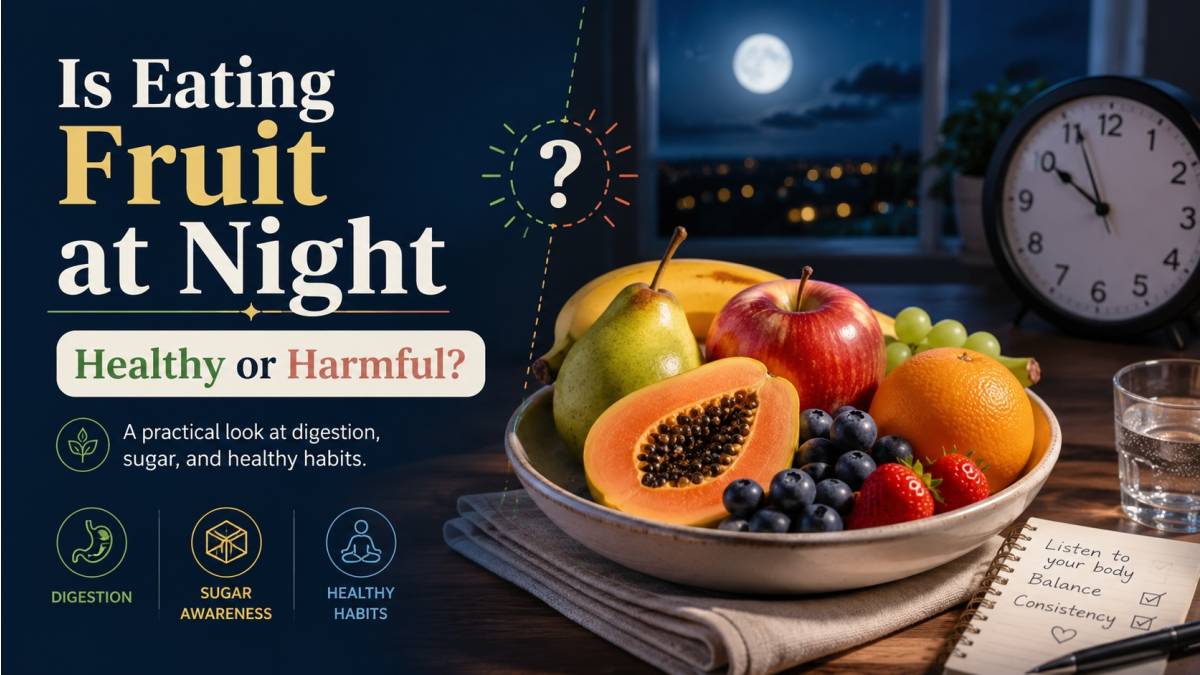
Vibha Yadav's opinion on Eating Fruit at Night Healthy or Harmful

Eating whole fruit at night is generally healthy, not harmful. The idea that fruit “turns into fat” or becomes unhealthy after sunset is mostly a myth.
Whole fruit provides fibre, vitamins, water, and natural sugars. For most people, an apple, guava, pear, orange, berries, papaya, or a small banana at night is far better than biscuits, sweets, fried snacks, or dessert. Fruit and vegetables support gut health and are associated with lower long-term risk of heart disease and other health problems.
A few practical exceptions matter:
- Keep the portion sensible: one fruit or one small bowl is enough. Large portions close to bedtime can add unnecessary calories.
- Choose whole fruit, not juice or smoothies: juice has much less fibre and can raise blood glucose more quickly.
- For diabetes or prediabetes: fruit is still allowed, but portion size and individual glucose response matter. A small fruit portion, ideally alongside a few nuts or plain yoghurt, is usually more balanced than fruit alone.
- For acidity or reflux: avoid citrus fruits late at night if they trigger symptoms; banana, apple, pear, or melon may be gentler choices.
- Do not eat immediately before lying down: leave roughly 1–2 hours where possible, especially if you get bloating or reflux.
So the fairest conclusion for your opinion platform would be:
Fruit at night is healthy for most people when eaten whole and in a sensible portion. The real concern is not the timing alone, but excess quantity, fruit juices, late-night overeating, diabetes management, and individual digestive tolerance.
Vibha Yadav
Expertise / Qualification: Certified Yoga Trainer, M.A. (Psychology)
Certified Yoga Trainer and dedicated health enthusiast helping people build strength, flexibility, and mindfulness. Combining functional fitness with traditional yoga practices to promote holistic, everyday wellness.
Comments
Login to Comment