R. Mallik's opinion on AI drones & “wingman” fighter aircraft
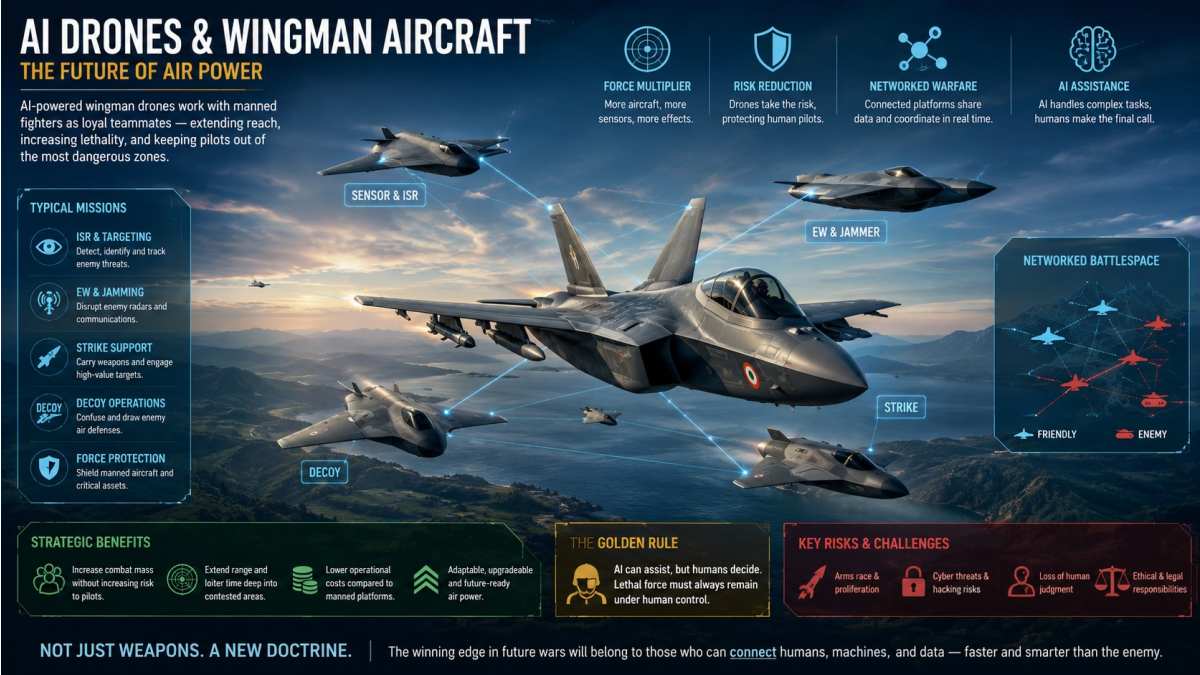
AI drones and “wingman” fighter aircraft may become one of the biggest changes in modern air warfare. The idea is simple but powerful: instead of sending only expensive manned fighter jets into dangerous airspace, a pilot can command unmanned AI aircraft to fly ahead, scan threats, jam enemy radar, carry weapons, or absorb risk.
In my opinion, this technology is strategically necessary but ethically dangerous.
The positive side is clear. A loyal wingman can protect human pilots, increase combat strength, and allow air forces to operate in heavily defended areas. Airbus describes these aircraft as autonomous platforms that support crewed fighters, increase “combat mass,” and reduce pilot workload. The U.S. Air Force is already testing Collaborative Combat Aircraft such as the YFQ-42A, designed to operate with fifth- and sixth-generation fighters. Boeing’s MQ-28 Ghost Bat has also crossed major test milestones with the Royal Australian Air Force, including autonomous weapon-engagement demonstrations.
But the danger is equally serious. Once countries begin deploying semi-autonomous armed aircraft, rivals will feel pressure to build more of them. This can create a new air-power arms race where speed, swarm numbers, and AI decision-making become more important than human judgment. Reuters recently reported that Europe and the U.S. are rapidly developing AI-powered wingman drones for sensors, jamming, and weapons, but many are still not operational and may only enter service later this decade or in the 2030s.
The biggest red line should be this: AI can assist targeting, navigation, threat detection, and mission planning, but the final decision to use lethal force must remain with a human commander. A machine may calculate faster than a pilot, but it cannot understand politics, escalation, civilian risk, or moral responsibility.
For countries like India, AI wingman aircraft should be treated as a long-term strategic priority. Future air battles may not be won only by the best fighter jet, but by the best network of pilots, drones, sensors, electronic warfare, and AI decision-support systems. However, speed should not come before safety. Strong cyber protection, human control, fail-safe systems, and clear rules of engagement are just as important as stealth and weapons.
Final view: AI drones and wingman fighters are not just weapons; they are the beginning of a new air-combat doctrine. Used wisely, they can save pilots and strengthen national defence. Used carelessly, they can make war faster, cheaper, and harder to control.
Comments
Login to Comment