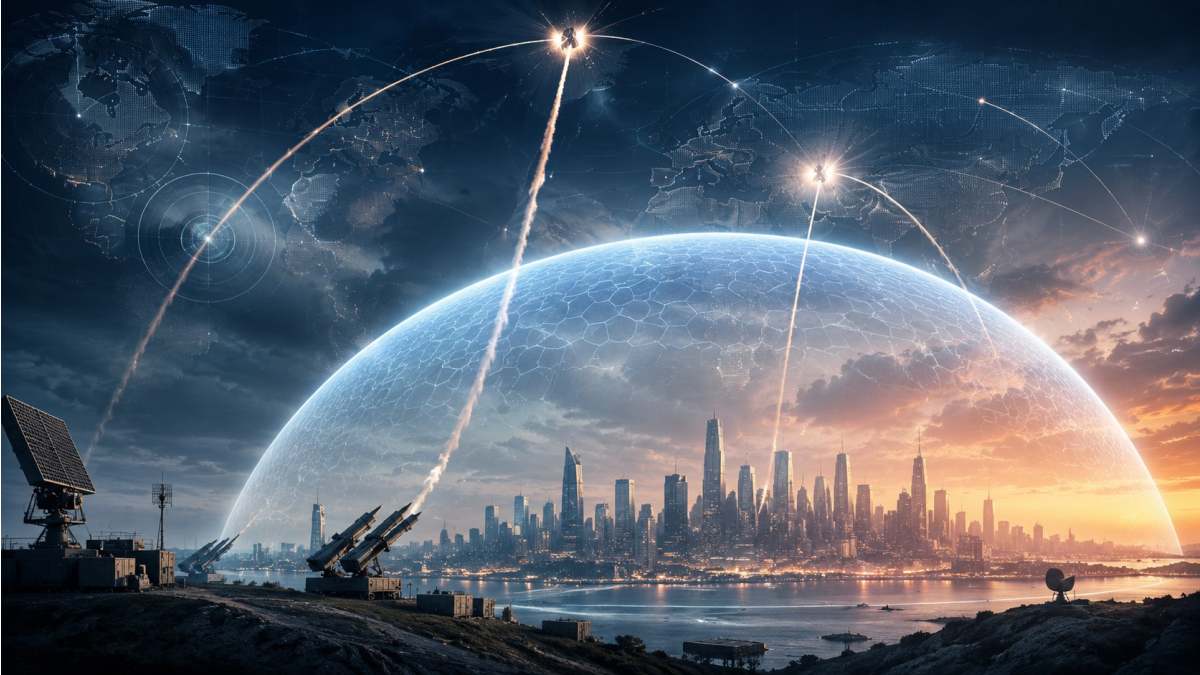
Gopal Haldar's opinion on Missile defence & air-shield race
The global missile defence and air-shield race marks a major shift in modern security thinking. For decades, military balance was largely built around offensive deterrence — the idea that a country would avoid attacking because retaliation would be devastating. Now, the world is moving into a new “shield vs. sword” era, where nations are not only building stronger missiles but also racing to build stronger systems to stop them.
In my opinion, missile defence is necessary, but it is not a complete solution. It gives countries protection, confidence, and strategic breathing space, but it can also create new insecurity if nations begin to believe that technology alone can guarantee safety.
The Security-Insecurity Paradox
The biggest problem with the air-shield race is that one country’s defence can look like a threat to another country.
When a nation builds an advanced ballistic missile defence system, its rivals may fear that their own missiles will become useless. This weakens the traditional logic of deterrence. Instead of feeling safer, the rival country may build more missiles, faster missiles, hypersonic weapons, decoys, or drone swarms to overwhelm the shield.
This creates a dangerous cycle. One side builds a shield, the other builds a stronger sword, and then the first side upgrades the shield again. The result is not always peace — sometimes it is a more expensive and unstable arms race.
The Cost Problem
Another serious concern is cost. It is often much cheaper to launch low-cost drones, rockets, or decoys than to intercept them with advanced missiles worth millions of dollars. In a long conflict, this cost imbalance can favour the attacker.
Modern warfare has already shown that no air defence system is perfect. A shield may stop many threats, but mass attacks, drone swarms, stealth cruise missiles, and hypersonic glide vehicles can still test its limits. The sky is becoming more crowded, more complex, and harder to defend.
Why Nations Still Need Air Shields
Despite these risks, countries cannot ignore missile defence. Systems such as the U.S. THAAD, Israel’s Iron Dome and Arrow, and India’s indigenous air-defence ambitions show why nations are investing heavily in layered protection.
A strong air shield can protect major cities, military bases, command centres, airports, energy facilities, and other critical infrastructure. Even if it cannot defend every inch of territory, it can reduce damage and save lives.
It also gives political leaders more time to think. Without air defence, a missile attack may force an immediate military response. With a functioning shield, leaders may get the breathing room needed to respond diplomatically, strategically, and with greater control.
For countries like India, indigenous missile defence development also has another advantage: technological sovereignty. Building domestic air-defence capability strengthens national industry, reduces dependence on foreign suppliers, and improves readiness during crises.
My Opinion
Missile defence and air shields are vital in today’s world, but they should never be treated as a magic wall. They are protective tools, not permanent guarantees of safety.
The real danger begins when nations start believing that a strong shield makes diplomacy less necessary. No defence system can stop every missile, every drone, every cyberattack, or every strategic miscalculation.
So, the best approach is balance: countries need strong air defence, but they also need strong diplomacy, arms-control dialogue, crisis communication, and regional stability. A shield can protect a nation from an attack, but only wisdom can prevent the attack from happening in the first place.
Comments
Login to Comment